
Skin tips
Skin Care at Every Age: From Puberty to Mature Skin
Dr. Uzma Khalil explains the common skin and hair concerns at each stage of life, from teenage acne to ageing skin, and the simple care that helps.
2 min read
Medically reviewed by Dr. Uzma KhalilMCPS Dermatology · PMDC Verified · Last reviewed
Your skin changes as you grow. The problems you face as a teenager are not the same as the ones that show up in your twenties and thirties, or later in life. Knowing what to expect at each stage helps you care for your skin early and know when to see a dermatologist.
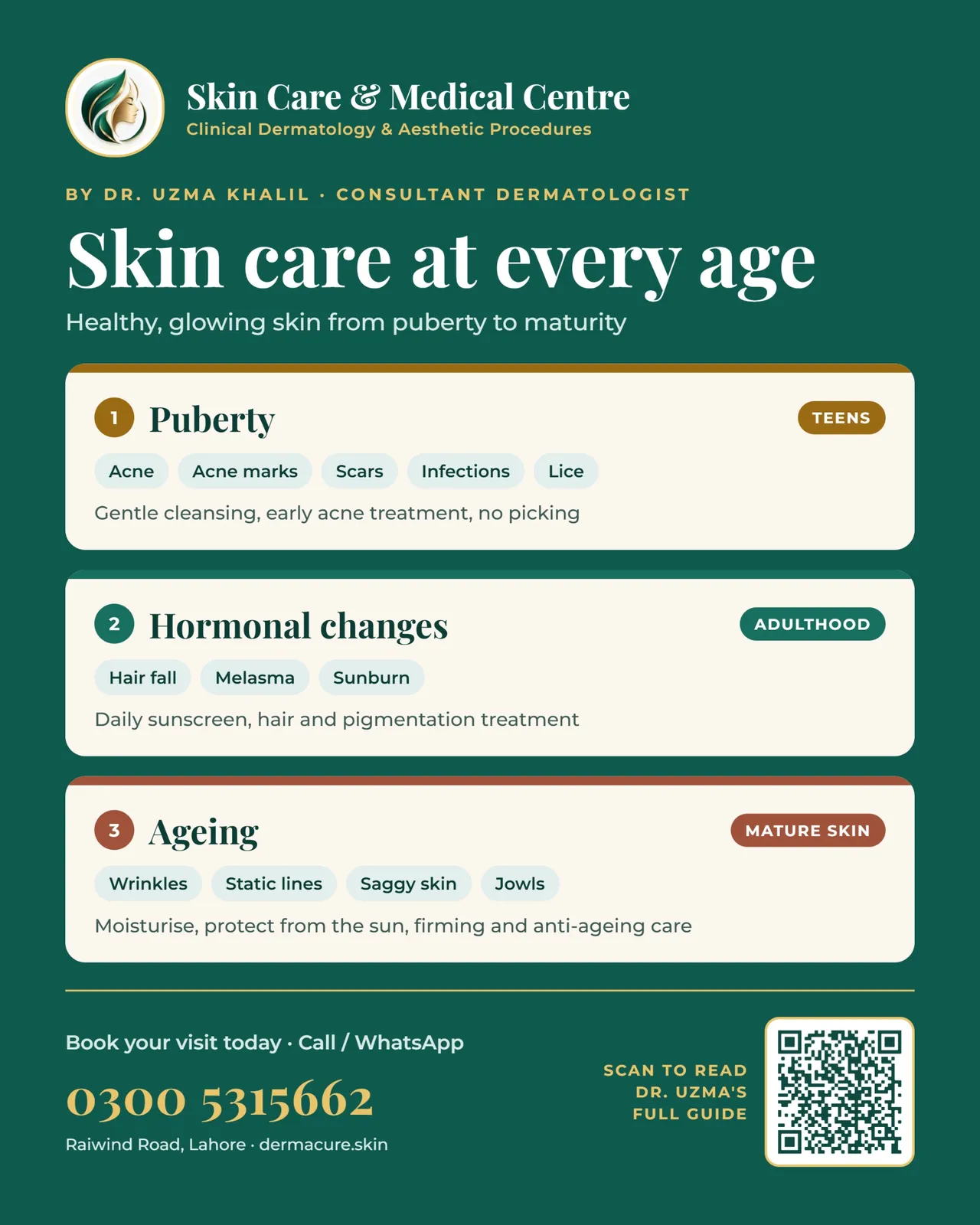
Puberty (teens)
Hormones become active during puberty, and this is when most skin problems first appear. Treating them early helps prevent marks and scars that can last for years.
- Acne
- Acne marks
- Scars
- Skin infections
- Lice
Hormonal changes (adulthood)
In adulthood, hormonal changes and daily sun exposure affect both skin and hair. Pigmentation and hair fall are among the most common reasons adults visit a dermatologist.
- Hair fall
- Melasma (patchy brown pigmentation)
- Sunburn
Ageing (mature skin)
As skin matures, it slowly loses firmness and moisture. Fine lines become more visible and the face can start to lose its shape.
- Wrinkles
- Static lines (lines that stay even when your face is relaxed)
- Saggy skin
- Jowls
One rule for every age
Gentle daily care and sun protection matter at every stage of life. When a problem doesn’t improve with basic care, a dermatologist can find the cause and plan the right treatment for you.
At what age should my child first see a dermatologist?
As soon as acne, marks or a skin infection starts to appear. Early treatment during puberty helps prevent long-term scarring.
Do I need sunscreen if I stay indoors?
Yes. Daily sunscreen is one of the simplest ways to prevent melasma, sunburn and early signs of ageing.
Is it too late to treat wrinkles and sagging skin?
No. Firming and anti-ageing treatments can help mature skin. A consultation will tell you which option suits you.